

On 11 November 2026, Singularity Legal, with Osborne Partners and ELWI, welcomed the legal and arbitration community to The Guild, Dubai, for “Dubai’s Year in the Spotlight: The 365 Days Round-up 2026”. Held during Dubai Arbitration Week, the afternoon brought developments before the DIFC Courts into conversation with the commercial pressures shaping disputes across the Gulf.
For the third year running, Singularity Legal’s annual book examining the preceding 365 days of DIFC Courts practice provided the foundation for the panel discussion. This year, a first-time collaboration with Osborne Partners and ELWI expanded the programme to encompass the wider commercial and dispute resolution landscape across the Gulf. Bringing together a broad cross-section of the DIFC Bar and leading members of the region’s disputes community, the result was an opportunity to examine the year’s most significant developments through the experience of those working directly with their consequences. Across both panels, a common question emerged: what do legal powers and institutional developments deliver in practice?
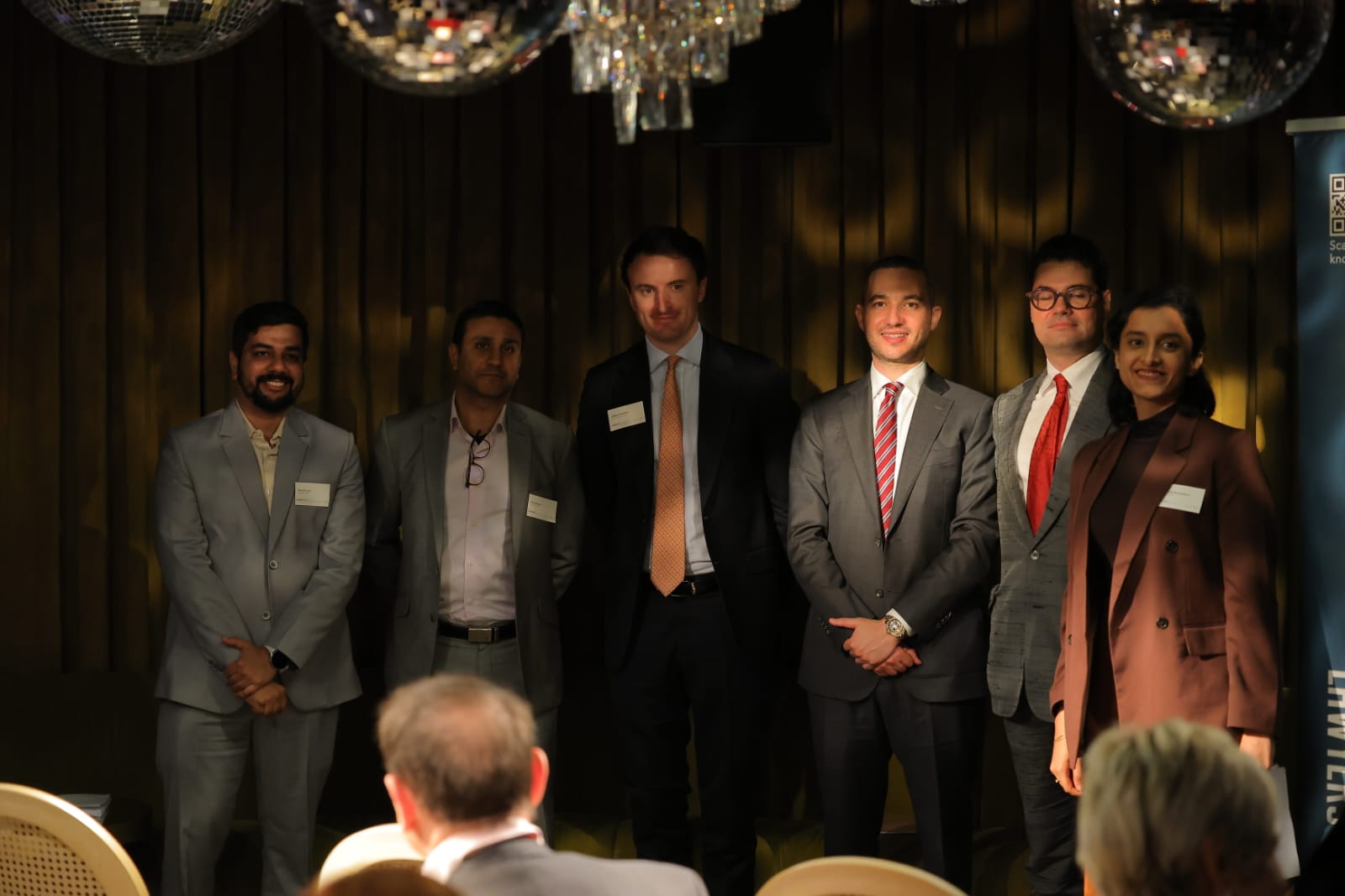
The first panel was moderated by Natasha Kavalakkat and Sanchit Suri, both Managing Counsel at Singularity Legal, and brought together William Prasifka, Partner at Habib Al Mulla & Partners; Rodrigo Carè, Senior Counsel at Galadari Advocates & Legal Consultants; Othmane Saadani, Partner at Bin Sevan Advocates & Legal Consultants; and Obaid Kazmi, Partner at Osborne Partners. With several panellists having appeared in the very decisions under discussion, the panel offered more than a conventional review of case law, bringing first-hand litigation experience to questions at the forefront of the DIFC Courts’ development.
Ms Kavalakkat opened the discussion with the DIFC Courts’ jurisdiction to grant interim relief in support of proceedings elsewhere. She revisiting last year’s debate over freestanding interim relief – where Trafigura, building on Carmon, confirmed the DIFC Courts’ jurisdiction to grant freezing orders in support of foreign proceedings, while Oran and Oaken v Oved distinguished anti-suit injunctions. Against that background, Mr Carè considered whether Article 15(4) of the new Courts Law should extend the Courts’ freestanding jurisdiction beyond freezing orders. He acted in Oleksei, in which he had sought to preserve the status quo pending a Milan-seated arbitration. Drawing on his experience in that case, Mr Carè distinguished relief sought in aid of an ongoing foreign arbitration from measures intended to protect prospective enforcement of a judgment or award. He explained how the injunction sought in Oleksei was regarded as restraining conduct outside the DIFC rather than preserving assets for enforcement. He also highlighted the Court’s concern over why parties bound by an arbitration agreement required assistance from the DIFC Courts rather than an emergency arbitrator. The exchange raised a broader question about the relationship between court-ordered protection and remedies available within arbitration.
Mr Prasifka then traced the common law’s evolution from treating injunctions as ancillary to a cause of action to recognising freezing orders as a means of protecting the enforcement of a prospective judgment or award. He distinguished this rationale from that governing other injunctions, including anti-suit relief. He noted that the DIFC Courts had typically exercised this freestanding jurisdiction in circumstances where assets were located in onshore Dubai, given their conduit enforcement role. This raised a further question about a potential “double conduit”: where assets are located in another emirate or country, and enforcement would need to pass through the onshore Dubai Courts, would the DIFC Courts still grant such relief? Mr Prasifka contrasted this with the position in ADGM, where conventional conduit enforcement is restricted, but the Courts have nevertheless recognised freestanding jurisdiction to grant freezing relief, including in A17 v B17, in which he appeared. The comparison highlighted the need to consider separately a court’s jurisdiction to grant protective relief and the routes available to give that relief effect beyond its territory.
Mr Suri introduced the next discussion by moving from the jurisdiction to grant a freezing order to the different question of how that order could be given effect in onshore Dubai. He used the September Trafigura judgment to frame the issue. The panel considered the Court’s conclusion that a freezing order, being an interim measure rather than a final and executory instrument, could not be directly executed in onshore Dubai through the conduit jurisdiction. Mr Carè noted that the requirement of finality was not entirely new, having appeared in the earlier legislative framework. He also drew attention to the 2009 enforcement protocol, whose Arabic text expressly contemplated freezing orders, and which had informed the established practice of seeking their implementation onshore. The decision has already influenced other proceedings, although Mr Carè observed that the relationship between the legislation and the earlier protocol may leave room for further consideration.
Mr Saadani approached the question from the remedies available before the onshore Dubai Courts. Although a worldwide freezing order has no exact equivalent under UAE civil procedure, precautionary attachments may offer comparable protection when appropriately sought. Drawing on a matter in which the lifting of an onshore attachment was followed by applications for protective measures in both jurisdictions, he explained the importance of obtaining the necessary permissions and presenting the interim nature, scope and exceptions of a DIFC freezing order accurately to the Dubai Courts. The exchange illustrated how the two systems can work together, while also exposing the risk of overlapping enforcement measures being used oppressively.
Turning to arbitral supervision, Mr Suri raised Oheo Bank and Princeton, two significant decisions in which the DIFC Courts set aside awards after tribunals had relied on positions that the parties had not been given a proper opportunity to address. Mr Prasifka considered the decisions through the principle of party autonomy. A tribunal’s authority derives from the dispute the parties have submitted to it, and its freedom to decide that dispute does not extend to determining a materially different case without allowing the parties to be heard. He regarded the decisions as an affirmation of procedural fairness rather than a general invitation to reopen arbitral awards on their merits, although they may encourage further challenges where similar concerns arise.
Ms Kavalakkat then introduced the CJT decisions in Serene Resources and Ajay Sethi, which concerned competing award-related proceedings in the DIFC and onshore Dubai Courts. She asked the panel whether the allocation of those proceedings to the courts of the arbitral seat merely resolved jurisdictional conflicts, or risked making the seat a necessary first stop for recognition and enforcement even where assets were located in the other jurisdiction. Mr Carè described his experience of onshore Dubai enforcement proceeding despite a pending challenge, subject to appropriate security, and contrasted it with DIFC proceedings in which enforcement and setting-aside applications had been consolidated. Mr Saadani reinforced the practical importance of choosing the appropriate forum at the outset. Where assets are located in Dubai, the speed of onshore enforcement may offer significant advantages, but those choices require careful consideration of the seat, the available remedies and the interaction between proceedings in the two court systems.
The discussion also examined the practical value of court-ordered asset disclosure, against the background of Orlagh and Zaya Living, which raised questions about the DIFC Courts’ ability to obtain information concerning assets outside the jurisdiction. Mr Suri asked Mr Kazmi how far such disclosure actually assists creditors in recovering assets. Drawing on his experience in financial investigations, Mr Kazmi explained that disclosure provides information at a particular moment, whereas funds may move considerably faster than the records documenting them. This led to a separate discussion on the growing role of technology in tracing and preserving digital assets. Against the backdrop of the DIFC Courts’ arrangements with specialist blockchain intelligence and custody providers, Mr Suri sought Mr Kazmi’s views on the usefulness of blockchain tracing in financial investigations. Mr Kazmi distinguished the ability to follow transactions between digital wallets from the more difficult task of establishing who controls those wallets and where recoverable value ultimately lies. He emphasised that blockchain intelligence and conventional forensic accounting must work together: tracing the movement of digital assets is an important step, but identifying the persons and assets against which recovery can realistically be pursued remains the ultimate objective.
The discussion then turned to the DIFC’s developing framework for technology-related disputes. Mr Suri asked Mr Prasifka whether the Digital Economy Court’s (DEC) specialist procedures offered meaningful advantages over ordinary DIFC proceedings, particularly given its limited published case record. Drawing on matters in which he had appeared, Mr Prasifka described the considerable procedural flexibility available, including urgent hearings within days and full merits trials within weeks. Significantly, his cases involved conventional contractual and duty-of-care claims with a technological dimension, illustrating the DEC’s potential beyond disputes concerning digital assets alone.

Prateek Bagaria, Partner at Singularity Legal, moderated the second panel with Sergey Alekhin, Partner at ELWI; Montek Mayal, Partner at Osborne Partners; and Faris Nasrallah, Head of Arbitration at Crescent Petroleum. It opened with a year of institutional expansion: the growth of the DIFC, the Bahrain International Commercial Court’s relationship with the Singapore International Commercial Court, Oman’s new international financial centre and the Qatar Financial Centre’s new rules. These developments, Mr Bagaria suggested, were helping to keep more Middle Eastern disputes within the region.
The Gulf’s financial-centre courts have become the world’s laboratory for attracting investment, in Mr Alekhin’s phrase. As the justice market matures, the question is increasingly which court is best suited to a dispute and how far its jurisdiction extends beyond the financial centre. The model is also travelling: his firm is working on a free-enterprise zone in Kyrgyzstan inspired by the Gulf’s courts, and Uzbekistan, Mr Nasrallah added, is following a similar path. Their international benches and combination of different legal traditions make the operation of these courts as significant as their establishment.
Mr Nasrallah described Dubai’s changing appeal: a place to build a career, supported by businesses continuing to invest through a difficult year. Asked how Dubai now compares with other arbitral seats, against earlier predictions of arbitration’s decline in the UAE, Mr Alekhin answered in a word: “comfortable”. Mr Nasrallah agreed, asserting its strength despite the negative publicity surrounding the recent conflict. In his assessment, the Dubai International Arbitration Centre (DIAC) is competing with leading international institutions, supported by a capable secretariat. Certainty as a seat also depends on the onshore courts. The panel referred to a study of Dubai enforcement decisions in which more than 75% resulted in execution, illustrating the importance of looking beyond headline cases when assessing the courts’ approach.
How, then, should the losses of a turbulent year be measured? Three issues have grown in importance, according to Mr Mayal: causation, the approach to valuation and the valuation date. A company’s value could differ markedly between 1 February and 1 March 2026, and valuation approaches must account for uncertainty. Above all, he warned against the opportunistic selection of a valuation date amid conflict, technological change and trade pressures. Mr Alekhin supplied a practical example: an opposing party had chosen its date because the price of a particular metal spiked that day.
The same tension runs through investment under the Dubai Economic Agenda D33. A valuation must reflect circumstances at its date, Mr Mayal explained, but crises should not be extrapolated into perpetuity. Risk premiums can revert: he pointed to Qatar’s financial buffers and said he had not yet seen evidence of structural change. The calculation of interest, Mr Nasrallah added, deserves equal care.
Sanctions create a particular difficulty for businesses arriving in Dubai. Mr Alekhin highlighted the gap between the domestic legal treatment of foreign sanctions and their practical effect through international banks and correspondent payment networks. Cross-border enforcement presents another challenge: DIFC judgments may travel less easily than arbitral awards. Mr Bagaria pointed to the GCC and Riyadh Conventions as a valuable starting point. Following the UAE’s accession to the Singapore Convention on Mediation, he suggested that participation in the Hague Judgments Convention might follow. The Singapore Convention enters into force for the UAE in April 2027. Challenges also remain in licensing, banking compliance and the complexity of overlapping digital-asset regimes. Even so, the speakers’ assessment was that capital which relocated to Dubai between 2022 and 2024 was staying.
Asked for one prediction each, Mr Alekhin anticipated force majeure disputes reaching courtrooms, while Mr Nasrallah expected further growth driven by government investment. Mr Mayal pointed to disputes over AI infrastructure, particularly the risk of cascading failures across interconnected systems.
Together, the two panels explored the evolving role of Dubai and the wider Gulf as centres for commercial activity and dispute resolution. While the first examined the developing powers of the DIFC Courts and their practical limits, the second considered the opportunities and challenges accompanying the region’s commercial growth. Across both discussions, the emphasis was on how legal and institutional developments translate into practical outcomes for businesses and practitioners.
Many of the developments discussed on the first panel are examined in depth in DIFC Courts in 2026: The Year in Review, by Prateek Bagaria, Natasha Kavalakkat and Sanchit Suri.
Singularity Legal thanks Osborne Partners, ELWI, the panellists and everyone who joined us during Dubai Arbitration Week 2026.